 |
| Insulin and Syringe |
Showing posts with label University of Cambridge. Show all posts
Showing posts with label University of Cambridge. Show all posts
Tuesday, 13 December 2016
Children with Type 1 diabetes could be spared daily injections
29,000 British children need to take multiple insulin injections every day to avoid Type 1 diabetes from destroying their immune systems. They depend on a method that was developed in the 1920s which researchers at Cambridge University think desperately needs changing. They have been testing a drug that could help patient’s immune systems to protect themselves rather than having to live their life around the needle.

Wind may swing Elections says Cambridge University Professor
People are losing faith in election forecasts from pollsters after several votes didn't go as expected. But people may want to pay more attention to weather forecasters in the run-up to elections according to Cambridge University's Judge Business School. They say that undecided voters heading towards the polls maybe swung by the weather that day. Because elections are being decided be smaller and smaller margins this could make the difference between going with the status quo and taking a leap into the unknown...
 |
| Woman voting in Iraqi elections in 2005 |
Thursday, 10 November 2016
Meet the 'Oldest Football Club in the World'
Cambridge is well-known for it’s scientific and technological
inventions, but in many ways it’s most popular creation is association
football. This link has now been recognised by the game’s National Football Museum who
have dubbed Cambridge University’s team as ‘the oldest football club in the
world’ as they inducted them into their Hall of Fame
Sunday, 6 November 2016
Dinosaur's brain tissue discovered on a British beach
Palaeontologists from the University of Cambridge and Oxford have discovered the brain tissue of a land-roaming dinosaur that's been dead for over 133 million years. The fossil was found in 2004 but only after some scanning were it's secrets revealed
Friday, 28 October 2016
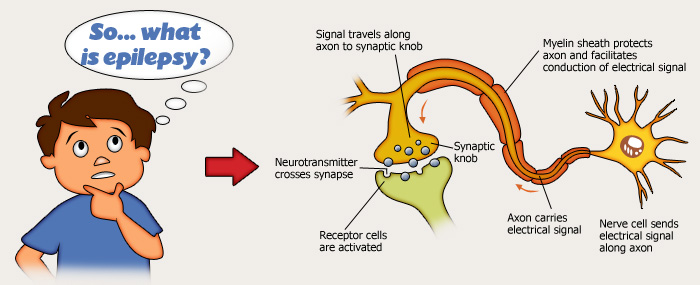
What is Epilepsy? Hear from those who live with it
Doctors and patients with epilepsy are raising awareness of the myths around the disease, to end the stigma associated with the condition. Around 6,000 people in Cambridgeshire have some form of epilepsy. Some experience seizures on a regular basis, whereas others may only have a handful over a decade. I met up with football commentator Karl Bates to find out more...
Friday, 21 October 2016
Scientists gain insights into oldest cancer that's spread through dogs
A contagious form of cancer that can spread between dogs during mating has highlighted the extent to which dogs accompanied human travellers throughout our seafaring history. But the tumours also provide surprising insights into how cancers evolve by ‘stealing’ DNA from their host.
 |
| Picture by Andrea Strakova |
New App could help with quicker Cancer Diagnosis
A clinical support app, pioneered in Cambridge can now help doctors worldwide to determine the ideal course of patient treatment after breast cancer surgery. The Predict breast treatment tool is a mathematical model already used by doctors online. Now a new app could provide quick and easy access for medical providers.

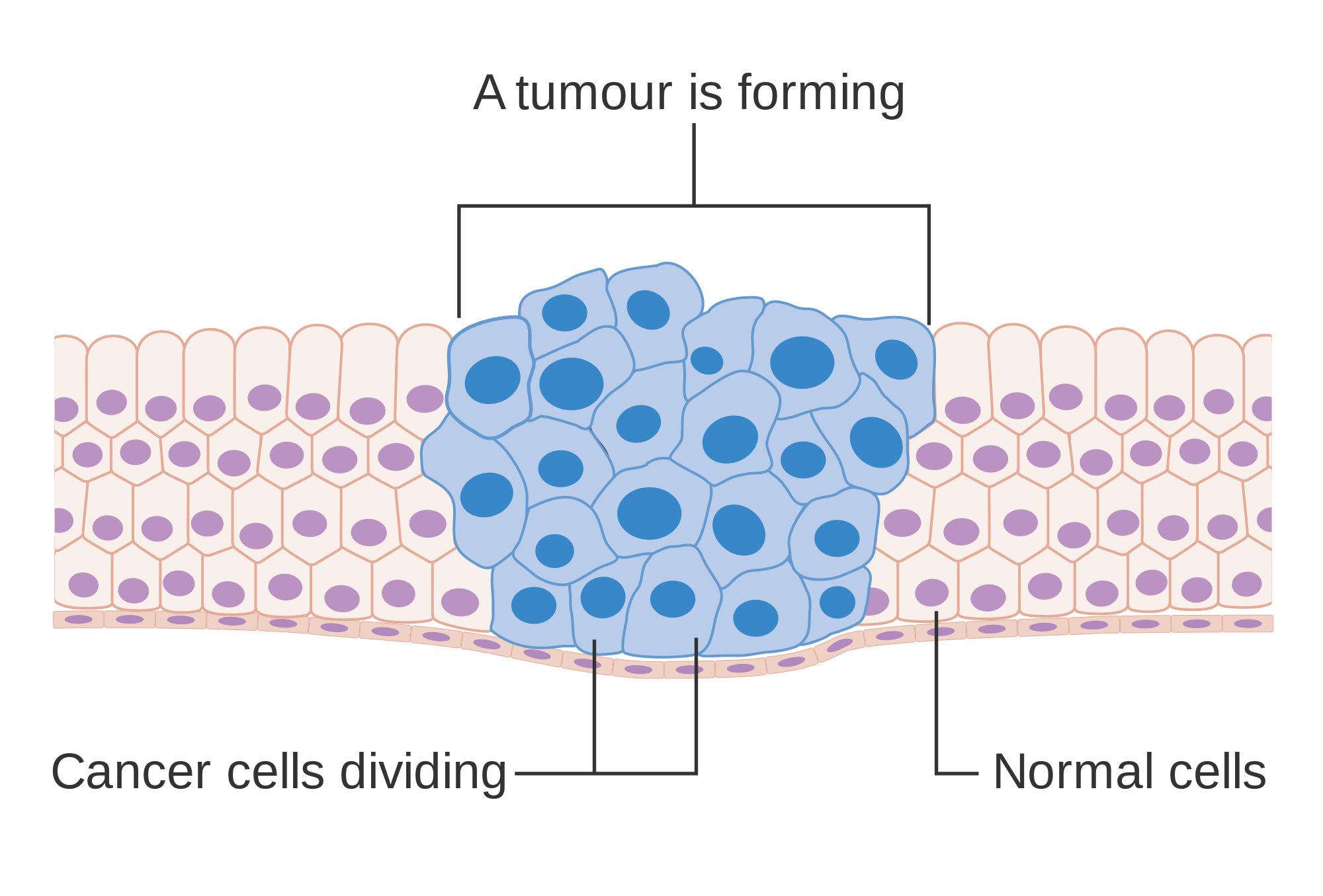
How our immune systems can fight back against tumour cells
Cambridge researchers have discovered how cancerous tumours protect themselves from an attack from the body’s immune system. The Babraham Institute is now working with American researchers to find out how it can prepare cancer patient’s immune systems to fight back.
Monday, 17 October 2016
Relic belonging to Saint Thomas Becket may have been found in Cambridge University Library
A Librarian at Corpus Christi College believes he’s found a relic belonging to English Saint Thomas Becket. The martyred archbishop’s personal book of psalms, which, it’s said, he was holding when he was murdered became a rare example of a book being used as a relic.


Saturday, 15 October 2016
New technology for treating malaria infected blood could save lives in sub-Saharan Africa
Transfusing blood to patients in sub-Saharan carriers a high risk of transmitting malaria, especially to young children. But now a technology has been developed to treat donated blood with Vitamin B and UV radiation. This is down to a collaboration between the Komfo Anokye Teaching Hospital in Kumasi, Ghana and the Department of Haemotology at the University of Cambridge:


Tuesday, 11 October 2016
The Day They Nearly Banned The Bomb
30 years ago today, Ronald Reagan and Mikhail Gorbachev almost agreed to completely get rid of their countries' nuclear weapons in a small room in Reykjavik, Iceland. But one word prevented them from doing so, much to the relief of many of their advisors and Cold War allies. The meeting was initially thought to be a failure but Professor David Reynolds (University of Cambridge and Dr Kristina Spohr (LSE) say it was actually part of a process that helped end the Cold War peacefully. They make this argument in their new book 'Transcending the Cold War: Summits, Statecraft, and the Dissolution of Bipolarity in Europe, 1970-1990.' Cambridge audiences will also be able to meet both of these Historians as part of the Festival of Ideas on the 26th October, at their talk, 'The Day They Nearly Banned The Bomb'
 Images courtesy of the Reagan Library

Sunday, 9 October 2016
Raspberry Pi events in Cambridge
More than 10 million Raspberry Pi's have been sold worldwide and have even been used by astronauts in space. The Raspberry Pi Foundation continues to operate from the city of it's creation much to the delight of the Cambridge community:
Dozens of roboteering teams turn out for Pi Wars in Cambridge, where contestants turn out for a series of challenges:
Others make music not war with the Raspberry Pi, such as Cambridge University's Dr Sam Aaron with his Sonic Pi:
The Sonic Pi was soon at the fingertips of the rest of the community at the Raspberry Pi Birthday party being held in the William Gates Building in Cambridge on 29th February. (The following video was filmed by Adam Page, Annie Edwards, Cleve Roberts and edited by Tom Lonsdale)
But before Raspberry Pis make it to Mars they'll be returning to the William Gates Building next year for Pi Wars 3.0 on 1st and 2nd April 2017:
Friday, 7 October 2016
Ultra-thin LED could lead to new quantum networks
Cambridge Physicists led by Professor Mete Atature may have found a way to create more secure communication networks by using graphene. Researchers for the Cavendish Lab and the Graphene Flagship have made ultra-thin Light Emitting Diodes, just a few atoms thick. It could improve everyday technologies from MRI scanners to clocks.
Team Dr Matteo Barbone, Dr Dhiren Kara and Carmen Palacious Berraquero
Team Dr Matteo Barbone, Dr Dhiren Kara and Carmen Palacious Berraquero
Tuesday, 4 October 2016
Best of my animal stories at Cambridge TV
From the tiny ant to the Iguanodon there's plenty of incredible creatures roaming or being studied (in a nice way) in Cambridge. I've had the privilege of meeting some beautiful creatures and their kindly keepers during my time at Cambridge TV. Here are some of my highlights:
K9 Aqau Sport
One of the first stories I did here involved a dog long-jump which involve, well, this...
Ants show Nano-scientists how it's done!
In the more serious surroundings of Cambridge University, scientists were looking towards a cleaning mechanism ants used which they thought could help them build new nano-machine!
Dog Expert awarded for 40 years of service
One of the nicest academics I met was Professor Mike Herrtage who got £10,000 from the International Canine Health Awards for the four decades working with the animals.
Do Zoos help animal conservation?
The Director at Shepreth Wildlife Park has became the first female Chairman of a national organisation representing Britain and Ireland's leading zoos. It came at a time when zoos are under increasing scrutiny after a keeper's death in South Lakes and the shooting of a gorilla in the states.
Dinosaurs Saw Red
Anyone who knows me knows I'm dinosaur mad, so any chance to play around in the Sedgwick Museum is never getting turned down!
Dinosaur Song
And I'm not the only one crazy enough about them, even the stuffy-Victorians wrote silly ditties about 'Jolly Old Beasts'
Wanna Help Animals?
While there's now an even gender split between males and females in Veterinary positions there very few men taking up roles as veterinary nurses. The College of West Anglia hope this doesn't stay the case:
K9 Aqau Sport
One of the first stories I did here involved a dog long-jump which involve, well, this...
Ants show Nano-scientists how it's done!
In the more serious surroundings of Cambridge University, scientists were looking towards a cleaning mechanism ants used which they thought could help them build new nano-machine!
Dog Expert awarded for 40 years of service
One of the nicest academics I met was Professor Mike Herrtage who got £10,000 from the International Canine Health Awards for the four decades working with the animals.
Do Zoos help animal conservation?
The Director at Shepreth Wildlife Park has became the first female Chairman of a national organisation representing Britain and Ireland's leading zoos. It came at a time when zoos are under increasing scrutiny after a keeper's death in South Lakes and the shooting of a gorilla in the states.
Dinosaurs Saw Red
Anyone who knows me knows I'm dinosaur mad, so any chance to play around in the Sedgwick Museum is never getting turned down!
Dinosaur Song
And I'm not the only one crazy enough about them, even the stuffy-Victorians wrote silly ditties about 'Jolly Old Beasts'
Wanna Help Animals?
While there's now an even gender split between males and females in Veterinary positions there very few men taking up roles as veterinary nurses. The College of West Anglia hope this doesn't stay the case:
Thursday, 29 September 2016
Scientists find quicker way of testing cancer cures
Cambridge Scientists have discovered a new way to test hundreds of cancer drugs quickly, cutting the time it could take to find breast cancer treatments. The new technique uses human tumour cells, grown in mice, which give an accurate representation of how cancer spreads. Cancer Research UK hope it could replace the current method of growing cells in the lab.


Wednesday, 28 September 2016
Classical statues compared to Michael Jackson and Rihanna
Cambridge University’s Museum of Classical Archaeology is using a modern twist on its Greco-Roman art in a new exhibition. Called “Recasting” it brings together works by contemporary artists nationwide who aim to embrace and challenge classical artistic traditions.


Astronomers closer to understanding Dark Matter
Cambridge researchers have detected two massive holes which have been ‘punched’ through a stream of stars just outside the Milky Way. They’re thought to be caused by clumps of dark matter, which could give further clues into their role in the universe.
 |
| V. Belokurov, D. Erkal, S.E. Koposov (IoA, Cambridge). Photo: Color image of M31 from Adam Evans. |
Placenta umpires tug-of-war between Mother and Baby for nutrients
Cambridge researchers have found that the placenta plays a key role in deciding how nutrients are shared between a pregnant mother and her baby. 1 in 8 expectant women in the UK still suffer with pre-natal complications, mainly caused by problems with the placenta. It’s hoped the study will provide an insight into how intervention could help.
Warning: The following news report contains images of a medical nature.
Warning: The following news report contains images of a medical nature.
Sunday, 25 September 2016
How Britain's Pompeii was unearthed
A bronze age settlement, preserved for over three thousand years has been uncovered in Cambridgeshire. Dubbed Britain's Pompeii it has given archaeologists one of the clearest pictures of how ancient Britain looked,worked and connected itself to the wider world.
 |
| Must Farm photo by Dr Colleen Morgan via Flickr |
Subscribe to:
Posts (Atom)